Neurodiversity advocate and LEGO fan shares top tips
Author: Jon Adams
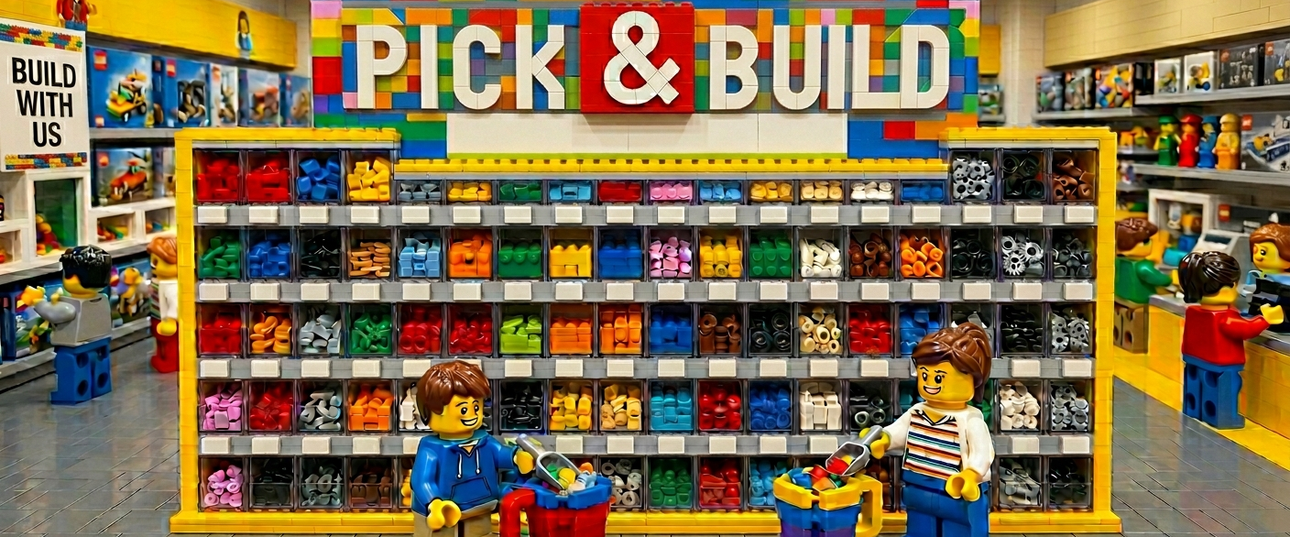
How many of you walk into the LEGO store and notice towards the back a wall, lined with drawers each filled with LEGO pieces, and probably a few people packing them into boxes. Let me explain, and yes this blog post may not specifically be for people familiar with the ‘Pick & Build’ wall but then again, maybe it is.
As a late diagnosed diagnosed AuDHD (autistic +ADHD) person I unfortunately can’t say they haven’t caused issues throughout my life but as a child at school LEGO and my curiosity for science and nature kept me going. Only rediscovering the joy of LEGO recently thru ‘Play Included’ after nearly 50 years, on my first ever visit to a LEGO store curiosity got the better of me and I took a look.
When I started using the ‘pick and build’ wall you had plastic cups, two sizes with lids, which were quick to fill with small pieces but if you took time to stack pieces together it wasn’t that easy. But I like spatial challenges involving pattern finding so that became my ‘task’ on subsequent visits to the LEGO store. I had to work out ‘What was the neatest and most effective way of filling a cup’. But most LEGO bricks are square so how did it work? I must admit at first I did watch a few videos to see how others filled a cups and then took it from there.
Then, in late 2023 cups were replaced by boxes. As boxes are mostly square was this going to be better? Even so I was wary due to an imminent and possibly tricky ‘familiarity change’. After the first time I not only found I adapted quickly, it was an improvement after all. A whole new era of pattern finding challenges then opened up before me.
You’ve probably gathered I tend to take the time to pack mine neatly, It’s part of the joy of going. Of course you can fit more pieces in but it’s the inventiveness and packing challenge that gives me a buzz. I notice the ways others either pack their boxes or just fill a box loosely and often get into conversation with parents who having watched me pack, may then start too. Some of the smaller pieces, 1x1’s and dots for example you can’t stack but you can add them loose to a half-filled box.
The noise and hubbub of a LEGO store can be quite difficult for us autistic people at times but I find because you seem nestled behind a staff area it’s not too hard to stay a bit longer. Once I was used to staff taking an interest, their helpfulness and conversation about your building projects and add in the PAB challenges, both go towards making my LEGO store experience enjoyable, boosting my self confidence and wellbeing. A rare opportunity we often all seem to need more of in our lives.
So next time you’re in a LEGO store give it a go. You just take a flat pack box, then fold and fill with LEGO. but if you have time, challenge yourself to see how much you can fit by ‘stacking and packing’ bricks creatively. And if you can when you get home (often after unpacking), complete the linked survey on your receipt and mention any staff who welcomed and helped you, because that then also supports them and their store.
I’d like to express a large thank you to the staff at the Southampton Store for permission to take photographs of the PAB wall, friendship and many positive experiences.
Guest Blog by Jon Adams